
Commercial & Office · Putrajaya
Menara KPKT, Putrajaya
The first ministry building in Malaysia to achieve GreenRE Gold. A 38-storey government headquarters running at 89.9 kWh/m²/year building energy intensity.
- Ministry in Malaysia to achieve a GreenRE Gold rating
- First
- kWh/m²/year building energy intensity
- 89.9
- Water-efficient sanitary fittings throughout
- 100%
- Storeys, plus four basement levels
- 38
The project
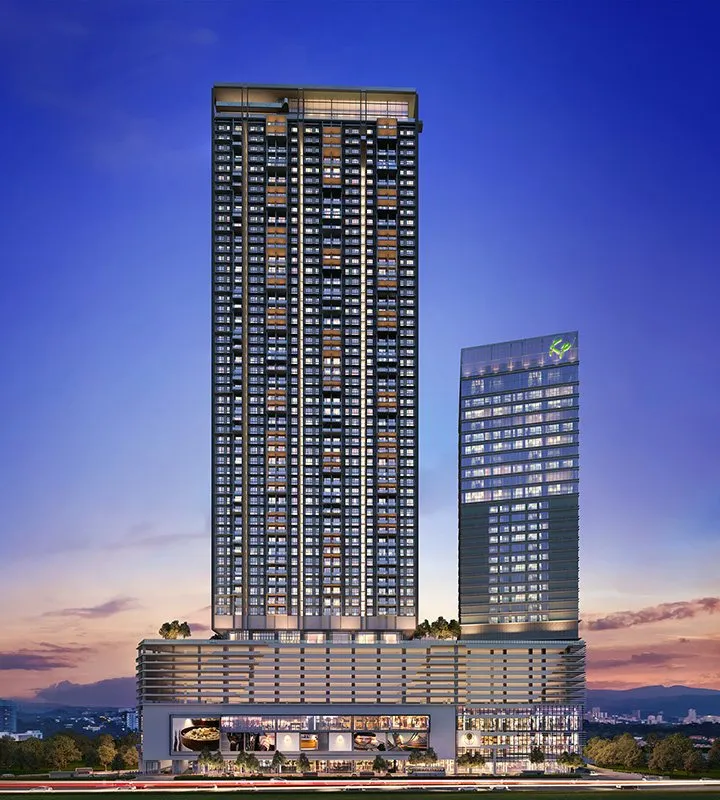
Menara Kementerian Perumahan dan Kerajaan Tempatan stands at 38 storeys with four basement levels in Putrajaya, with a gross floor area of approximately 117,539.73 m². It is the working headquarters of a federal ministry: continuously occupied, continuously conditioned, and operating under the procurement and facility-management constraints that every government building operates under.
ESD GreenTech was engaged to facilitate and manage its GreenRE certification under the Existing Non-Residential Building (ENRB) v3.3 tool. It is now the first ministry in Malaysia to hold a GreenRE Gold rating.
Why an existing building is the harder assessment
A new development can design its way to a rating. The envelope, the plant selection, the facade: all of it is still on paper, and a consultant engaged early can shape the specification towards the credits.
An existing building has none of that latitude. The envelope is built. The plant is installed. What is left is how the building is actually run, and whether the records exist to prove it. ENRB v3.3 is deliberately weighted that way: it rewards measured energy performance, documented management policy, and operational discipline, not design intent.
That makes the work fundamentally different. It is closer to an audit than to a design exercise. The work is establishing what the building genuinely does, finding the evidence for it in years of operational records, and presenting that evidence in the form the assessment requires.
What we did
We carried out a comprehensive review of Menara KPKT’s environmental performance and operational practices against the ENRB v3.3 requirements, then coordinated the site assessments, technical reviews, supporting documentation and GreenRE submissions.
The decisive factor was access and records. We worked alongside Bahagian Khidmat Perunding and the Building Facilities team, who facilitated access to the building, gathered the operational information and records the assessment depended on, identified green initiatives already in place that had never been formally documented, and compiled the supporting evidence.
That last point is worth drawing out, because it is the common pattern in government buildings. Much of what earns credits here was already happening: the recycling, the ventilation control, the air quality monitoring. What was missing was the evidence trail. A large part of a successful existing-building certification is recognising which established practices are creditable and then documenting them to the standard the assessor requires.
The GreenRE consultancy was led by Ben Ng Kok Kin, GreenRE Accredited Professional, with the ESD GreenTech project team.
Energy
The building is served by a District Cooling System, which removes chiller plant from the building entirely and draws chilled water from a central plant serving Putrajaya. For a tower of this size the cooling load is the dominant share of consumption, so the DCS connection is the single largest determinant of the energy result.
Measured building energy intensity is approximately 89.9 kWh/m²/year. For context, 135 kWh/m²/year is the figure commonly cited as the Malaysian office benchmark under MS1525, and a typical unimproved office tower in this climate runs well above it. Menara KPKT sits materially below that benchmark while operating as a full-occupancy ministry headquarters.
A solar photovoltaic system contributes approximately 0.26% of consumption. That number is small and we publish it as it stands: on a 38-storey tower the available roof area is a fraction of the floor area it has to serve, and rooftop PV can only ever be a marginal contribution at that ratio. It is worth having, and it is not where the energy result came from.
Underneath both sits an Energy Management Policy, which is what keeps the figure under continuous review rather than making it a one-off measurement. Under ENRB, policy and monitoring are creditable in their own right, for the straightforward reason that an efficient building without them tends not to stay efficient.
Water, air and the car parks
Water efficiency runs to 100% water-efficient sanitary fittings throughout the building, a complete retrofit rather than a partial one. That is unusual at this scale, and it is the reason the credit lands in full.
In the basement car parks, carbon monoxide sensors regulate the mechanical ventilation system according to measured conditions instead of running the fans on a fixed schedule. Car park ventilation in a four-level basement is a significant and largely invisible load; demand-controlled operation is one of the highest-return retrofits available in an existing building, and it improves conditions in the car park at the same time.
Annual Indoor Air Quality audits monitor the indoor environment for the people who work there. In a continuously conditioned, high-occupancy building this is not a formality. It is the mechanism that catches a ventilation problem before it becomes an occupant health problem.
How the building is run
Sustainability at Menara KPKT extends past the building systems into daily operation:
- a building-wide recycling programme supporting waste segregation and responsible disposal
- electric vehicle charging stations, supporting the shift to lower-carbon transport
- convenient access to nearby public bus services
- bicycle parking facilities for staff who travel actively
- an environmental education corner promoting awareness and green practice among occupants
Individually these are modest. Collectively they are what ENRB v3.3 is designed to find, because they are the difference between a building that was certified once and a building that is actually being operated sustainably.
Outcome
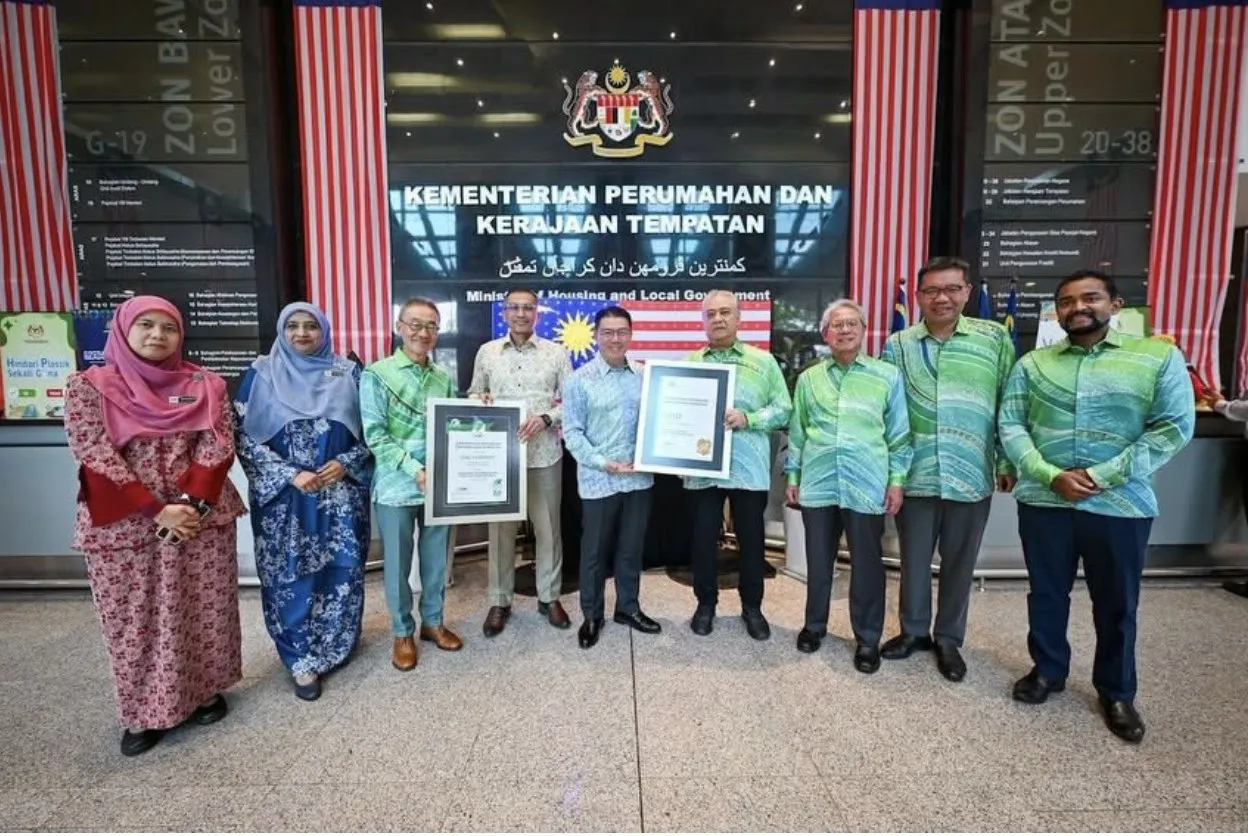
GreenRE Gold under ENRB v3.3, and the first such rating held by a Malaysian ministry. Work continues towards Platinum.
The achievement was made possible through close collaboration between KPKT, Bahagian Khidmat Perunding, the Building Facilities team, ESD GreenTech and GreenRE. Throughout the certification the cooperation of the KPKT teams was what enabled the on-site assessment and provided the technical documentation, operational records and supporting information needed to demonstrate compliance.
For the wider public sector the precedent matters more than the rating. Malaysia’s government estate is large, mostly existing, and mostly built before any of these standards applied. Menara KPKT demonstrates that an existing government building can enhance and validate its environmental performance through structured assessment, effective facility management and sustained operational practice, without waiting for a replacement building.
Green building performance is not settled at design stage. It depends on how a building is operated, maintained, monitored and improved across its life. That is a harder case to make, and this building makes it.